
The Finland Paradox
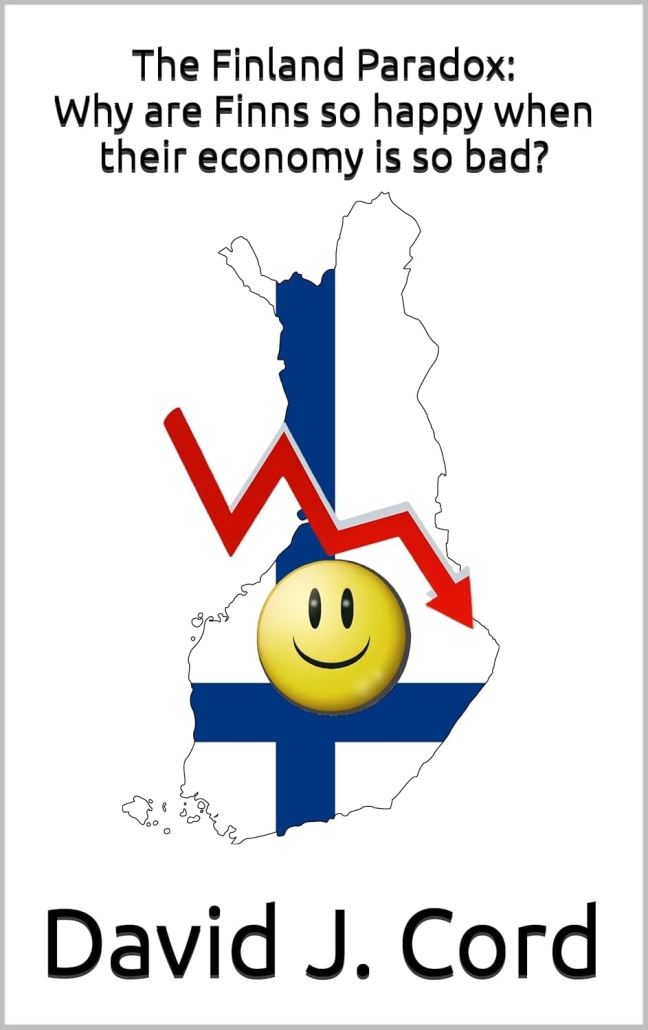
Why are Finns so happy when their economy is so bad?
Each year global rankings show Finland as the happiest country in the world. Yet Finland began 2026 with the worst economy in Europe, with a shrinking GDP and the highest unemployment rate. This is not a new development, either. Finland’s economy has not grown in sixteen years.
How has Finland built and maintained a happy society during a generation of economic stagnation? More importantly, can their happiness be maintained in an era of unending budget cuts and economic malaise?
From the author of The decline and fall of Nokia and My land, The Finland Paradox examines the relationship between happiness and the economy in Finland, which could be an object lesson for other countries.
Human Written: I use a maker’s mark to assert the organic, biological, non-AI-generated nature of my work. This is a professional guarantee of: accountable authorship, informed judgement, original composition, human empathy and artistry, and real-world experience. This distinction matters. David J. Cord
The Decline and Fall of Nokia

Nokia’s fall from the pinnacle of the mobile phone industry was unprecedented in both its rapidity and its extent. Now for the first time the true, comprehensive story is told of the decline and fall of Finland’s greatest company.
The Decline and Fall of Nokia details Jorma Ollila’s retirement, Olli-Pekka Kallasvuo’s new role as CEO and the final years of unqualified success. Nokia’s strategy is to drive digital convergence through their expansion into personal electronics as well as into content and services. It works well – at first.
Weaved throughout the narrative are explorations of Nokia’s structure and culture, the company’s relationship with Finland, and reflections upon successes and mistakes.
Apple’s iPhone, Google’s Android and low-cost competitors disrupt the market, and Nokia’s attempts to correct their worsening situation are increasingly futile. Stephen Elop’s choice of the Windows Phone operating system is a catastrophe which results in the sale of the handset business to Microsoft. Yet there is still a future, both for the devices business and for the new, slimmer Nokia.
The Decline and Fall of Nokia is based upon exhaustive research and dozens of interviews. Journalists, financial analysts, competitors, politicians, union leaders, technology experts and Nokia insiders – from modest engineers to the highest executives – have told their stories, given their private insights and expressed their opinions for the book
The Decline and Fall of Nokia – second edition

In the spring of 2016 the second edition of The Decline and Fall of Nokia was released. This second edition has additional information in regards to Nokia’s troubles and has been updated to reflect the current state of the industry and what the major players are up to. It also addresses some reactions of the press, public and influential industry leaders to revelations from the first edition.
The second edition is only available as an ebook from Stairway Press.
Mohamed 2.0

In a fascinating, well-written treatise, David J. Cord documents the rise and fall of Mohamed el-Fatatry’s social media experiment: Muxlim, which could be described as analogous to a Facebook for the online Muslim community. Are Muslims, particularly the young, only interested in hate and destruction? No, like everyone else, most are real, down-to-earth people interested in fashion, gossip, sports, music, dance and linking and chatting with their online friends in the global, one-world community. Al-Fatatry’s venture failed, but the goal remains as vital as it ever was, only more. Aren’t we tired of negativity and destructive stereotypes? If so, this book is a step in a refreshing positive direction. Buy it today and strike a blow for world peace and multicultural harmony.
The Finnish-Swedish publishing house has published, in English, a great book for any start-up entrepreneur or business angel as an educational resource.
For the rest of us Mohamed 2.0 works as quality entertainment, drama that even Hollywood would never have come up with. Muxlim’s story might have been a glorious failure, but David J. Cord’s book is, even in its idealising, simply brilliant.
Tommi Aitio, Muxlim’s Glorious Failure, Kauppalehti